Showing posts with label Scrum . Show all posts

Beware of Scrum

Scrum is one of the biggest process invention but it does not guarantee success. Even creators of Scrum accept that more than half of the Scrum implementation does not go well. Why is that? Scrum is critical but what is more critical than Scrum? Moving from waterfall model to Scrum is a welcoming change that makes people think in the right direction. So what is the right direction?

If a person with ongoing back pain visits the doctor then doctor certainly suggests to do exercises or yoga to make body agile enough to get rid of pains. If that person is wise like me then he starts doing exercises and pain disappears. Exercises don't cure pain overnight. It requires a regular routine. Isn't it common to see pain appear again when exercises are stopped?

In this example "routine is Scrum" and "exercises are agility". A healthy person needs routine as well as exercises. Similarly, a good projects or organizations need both Scrum as well Agility.

Let's extend our example little further and review the root cause of the pain. Main reason behind this person's pain is routine of sitting in a chair with bad posture for a long time. Similarly, root cause for failed Scrum project is routine of not practicing agility for a long time.

In a nutshell, Scrum forces people to think in the right direction i.e. agility. As you can understand, routine is important but exercises are critical. Hence, Agility is more critical than Scrum. The following video depicts relationship of Scrum and Agility in great details with an creative analogy.Here are the key learning objectives:
  • What makes Scrum successful?
  • Are you failing because you are overdoing Scrum?
  • When not to use Scrum?
Presentation slides are available here in the pdf format.


Agile Strategy Manifesto


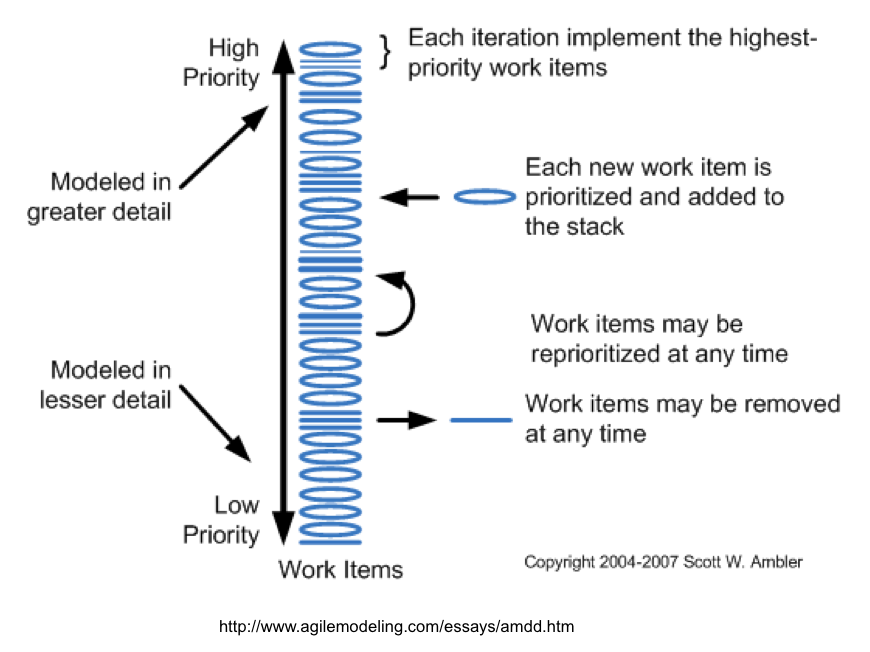
Agile product development is growing fast with intense focus on perfecting Agile execution. However, the business strategies developed by many organizations are still non-agile. For example, Agile product development teams are pushing business owners to prioritize the product backlog to deliver the highest value features in each iteration. However, business owners are not necessarily providing prioritization based on the organization's business strategy.

A successful business strategy involves making choices throughout the value chain that are interdependent. For an organization to realize the full benefit of its business strategies it must develop and maintain them using an Agile approach. The following video explains Agile Strategy Manifesto. You can also watch it on youtube.


KEY CHARACTERISTICS OF AGILE STRATEGY

Agility Explained - Back To The Basics

It is easy to deviate from the goals we set. If you are on a agile journey then take a step back and try to validate if you are going on a right track. May be you are too busy in implementing a process that is not really agile. It doesn't hurt to validate. Do you know types of agility? What are agility drills? How can agility drills help you in successfully implementing strategy?

The following video provides a fresh perspective on agility and explains it with the help of real life examples. I really enjoyed making it. I hope you will find it valuable. Here are the key learning objectives:
  • What is agility?
  • Types of agility - Programmed and Random
  • Agility drills - preset, reaction, quickness
  • Where does Scrum fit in agility?
Presentation slides are available here in the PDF format.

Agile Retrospective: Journey of an Agile Team

Agile brings a lot of behavioral and process changes, hence, adoption does not happen overnight. It takes a considerable amount of time for teams to iteratively understand and experience agile concepts. As a matter of fact, 2-4 weeks iterations (sprints) attract most of the teams wanting to be agile. Teams start iterating without clearly understanding value of other key agile concepts e.g. burndown charts, backlog management, definition of done, estimation practices etc. These teams start appreciating implementation problems through retrospectives. This appreciation for the problems also makes it easier for teams to learn agile techniques to solve problems incrementally.

Each team is different and there agile journeys may differ too. There are no silver bullets for perfect implementation. Retrospectives play a key role for the sustained adoption. This video case study represents a typical journey (milestones) of an agile team that I have experienced in various agile adoptions. You may find it useful too.

Click below to watch embedded video.


A Rule of Thumb: Ideal Sprint Length

As teams start to mature in Agile and try scaling for further efficiencies, one of the most common questions is about the ideal length of the sprints. Most teams are not satisfied with their current sprint length. This may be simply because they might not have experimented with different sprint sizes. My suggestion is that teams should experiment with different sprint lengths to learn and adapt to their own realities. More iterations are better as long as team is mature enough to gain extra efficiency from it.

10 Scrum Rules

Isn't it amazing that the most popular development process, Scrum , is just based on 10 simple rules, however, it takes a while for people to become experts in these. Enjoy links for the definitions and in-depth learning.


User Stories & Backlog Management

A user story (work item) is a short, simple description of a feature told from the perspective of the person who desires the new capability, usually a user or customer of the system. They typically follow a simple template:
As a , I want so that .

Scrum - An Agile Framework

Scrum is an Agile approach to software development. Rather than a full process or methodology, it is a framework. So instead of providing complete, detailed descriptions of how everything is to be done on the project, much is left up to the software development team. This is done because the team will know best how to solve the problem they are presented. This is why, for example, a sprint planning meeting is described in terms of the desired outcome (a commitment to set of features to be developed in the next sprint) instead of a set of Entry criteria, Task definitions, Validation criteria, and Exit criteria as would be provided in most methodologies.

Lot of people contributed to the community by sharing their work. Each person has their area of strength. Here is a list of best resources on Scrum. Have fun and let me know if you see anything good missing. You can also take free online Scrum course .

Agile Metrics

Here is the collection of my favorite links for Agile Metrics.

Planning and Tracking on Agile Projects

Here is a quick summary of 6 levels of Agile Planning:


Agile Self-Learning Guide

Agile software development is a group of software development methodologies based on iterative and incremental development, where requirements and solutions evolve through collaboration between self-organizing & cross-functional teams, close customer collaboration, and the ability to respond quickly to change.

Inspect & Adapt: Scrum Assessment Scorecard


This is my attempt to help community to mature by providing a simple assessment tool to "inspect" scrum maturity. Success of " Adoption " is what differentiates high-performing and low performing teams. This Scoreboard is a useful way of answering the question: "are you doing scrum?". There is much more to high-performance than just doing things mentioned in the assessment tool, hence, scoring high is not a key goal. It is more of a starting point.

Good Scrum Analogies

Scrum is...
Be creative and suggest more...

Scrum is all about common sense called ScrumSense

You need to deliver working product (value) faster and earlier as per the customer needs. Can you do so by doing the following steps in a sequence: define --> design --> develop --> test -->deploy? Just by applying common sense, you can find out most of these steps can be parallel. If you apply more common sense then you will realize that many of the steps can be automated to yield even better results. Well, someone correctly said that common sense is not so common , hence, waterfall model survived too long.


Two common men's ( Ken Schwaber & Jeff Sutherland ) common sense was tingling, hence, they consolidated bunch of common sense practices and named it Scrum. Then a bunch of folks with common sense joined them to spread common sense through out the world as ScrumAlliance . Interestingly, you can pay to get trained and certified for learning, adopting, implementing and spreading this common sense ( ScrumSense ). As a result, ScrumSense is much more common these days. Welcome to the world of ScurmSense. Don't just learn to use it but spread it every day. Let ScrumSense prevail!